
THE HIDDEN STRESS OF MODERN ABUNDANCE
More options, more information, more convenience, and more opportunity than any generation before us has ever experienced.
At any moment, we can order nearly anything, connect with anyone across the world, and choose from endless possibilities. On the surface, this abundance looks like progress.
Yet beneath it, many people feel increasingly overwhelmed.
This isn’t because abundance is inherently bad. It’s because the human brain was never designed to continuously process this level of choice, stimulation and input.
Psychologists refer to this as cognitive overload, the mental fatigue that comes from constantly evaluating options, responding to information, and navigating complexity.
Each decision, no matter how small, draws on limited mental energy.
What once required simplicity now requires constant evaluation. What to watch. What to eat. Where to live. How to work. When to rest.
Even relaxation has become a series of decisions.
The endless scrolling between streaming platforms. Neighborhoods chosen for proximity to everything, yet often lacking peace. Open-plan offices meant to encourage collaboration that quietly erode focus. Smartphones that collapse work, news, social life, and entertainment into a single never-ending stream.
Over time, the mind remains in a subtle state of effort. Not panic. Not crisis. Just quiet strain.
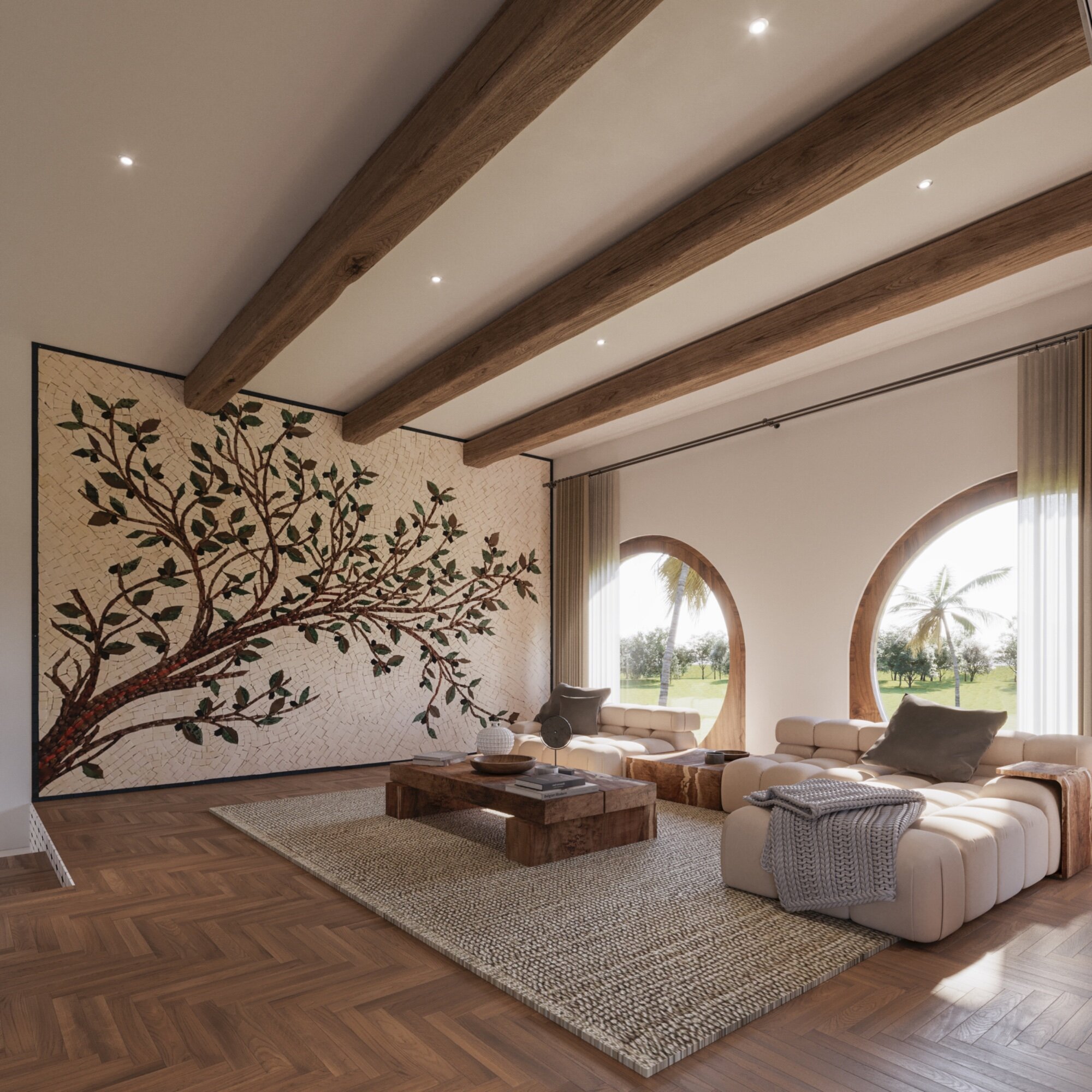
Los Arcos - The Genesis Collection, Riviera Maya, Mexico.
This is why many people feel tired without being physically exhausted. Why focus feels harder than it used to.
Why the mind rarely feels fully at ease.
Abundance creates friction where there once was flow.
Fifty years ago, daily life operated within narrower parameters. Not better or worse overall, but structured differently. There were fewer career paths, limited media channels, more localized social lives, and far less continuous decision making.
Modern life offers far greater freedom, but pairs it with endless stimulation.
Notifications pull attention in every direction. Environments are dense with sound, light, and activity. Schedules rarely soften.
The nervous system never fully powers down, not because of danger, but because of perpetual input.
Research consistently shows that excessive choice and stimulation increase stress levels, reduce satisfaction, and impair decision making. When the brain becomes overloaded, abundance stops feeling empowering and begins to feel pressuring.
This pressure often goes unnoticed.
It hides behind productivity, behind success, behind lives that appear full and active.
But the body registers it.
Muscles remain slightly tense. Breathing becomes shallower. Attention jumps quickly from one thing to the next. People adapt so gradually to this state that it starts to feel normal.
Until they experience contrast.
When people enter quieter, simpler environments, thoughts slow. The body relaxes. Focus deepens.
Not because life has changed dramatically, but because the background mental load has been removed.
This is why so many people are beginning to crave simplicity, space, and clarity. Not as a design trend or aesthetic minimalism, but as relief from constant cognitive effort.
The desire for quieter living isn’t about rejecting modern life. It’s about reducing unnecessary complexity.
It’s about choosing environments that don’t constantly demand attention.
This shift is quietly influencing how people think about their homes, their surroundings, and the pace of daily life.
Instead of maximizing stimulation and proximity to everything, many are beginning to value environments that offer fewer demands and more ease. Spaces where life feels intuitive rather than overwhelming. Where routines flow naturally. Where the mind can rest without effort.
For many, completely redesigning life isn’t immediately possible. Careers, family responsibilities, and financial realities still exist.
But even within those boundaries, there is often more agency than people realize.
Not in changing everything overnight, but in identifying which inputs are truly necessary and which are simply inherited defaults.
This pattern doesn’t affect everyone equally. Some nervous systems genuinely thrive in dense, high-stimulation environments.
But for many, the default modern setting extracts a cost that compounds quietly over time.
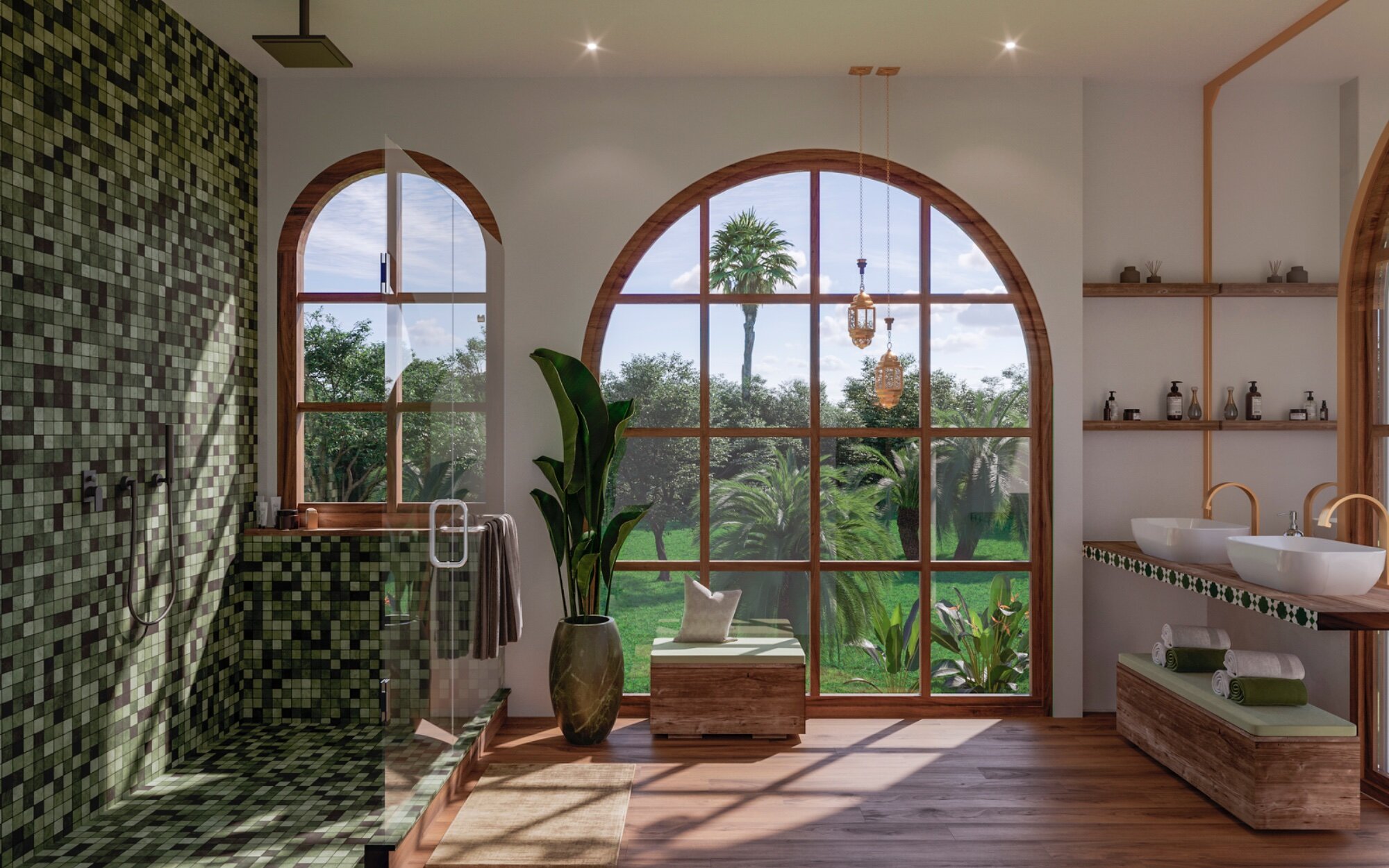
Bathroom, Hacienda - The Genesis Collection, Riviera Maya, Mexico.
Rather than endlessly adapting to abundance, people are learning to design their lives around clarity.
And increasingly, that begins with where they live.
Choosing surroundings that simplify rather than complicate. That offer space instead of compression. That support focus, presence, and calm as part of everyday life.
This isn’t about stepping backward.
It’s about stepping into a way of living that feels sustainable in a world of constant input.
Abundance will continue to grow. Information will accelerate. Options will expand.
But the future of well-being may belong to those who intentionally reduce what their environment demands.
Those who choose simplicity within abundance.
Those who shape surroundings not to impress, but to support.
The hidden stress of modern life isn’t that we have too little.
It’s that we are constantly asked to process too much.
True freedom isn’t found in endless options, but in intentionally shaping the environment around you to require less and offer more.
What would shift if your surroundings stopped demanding constant attention?
contact us