WHAT THE MAYA SOLVED, AND WHAT MOST OF TULUM FORGOT.
VILLA HACIENDA, COURTYARD POOL.
%20(1).jpg)
THE QUESTION THE MAYA ALREADY ANSWERED.
Long before anyone described this stretch of coast as a corridor,the people who lived here had already answered the hardestquestion in tropical building. How do you make a structure thatstays cool without machinery, sheds the rain, survives the salt,and is still standing after the sun has worked on it for a fewhundred years.
They answered it so well that the answer is still standing. Howthey answered it is the part worth carrying forward, because thehomes that endure in Tulum today are quietly built on the sameprinciples, and the ones that struggle are the ones that forgotthem.
The house that reads the climate.
Start with the building most people overlook. The ordinary Mayahouse, the nah. It is the ancestor of nearly every thoughtfulstructure in the Yucatán, and almost nothing about it isaccidental.
The form is an ellipse with rounded ends. That shape is not folkdecoration. It lets wind pass around the structure rather thanslam into a flat face, which matters on a peninsula that sits inthe path of Caribbean storms. The walls are built frombahareque, a woven framework of wood packed with earth and lime, a technique whose modern descendants perform well inserious seismic conditions. The house was oriented to the pathof the sun and the prevailing sea breeze, so the air movedthrough it on its own and the worst heat of the day never landedwhere people lived.
Then there is the roof, which is the real piece of engineering. Itis thatched with the leaves of the huano palm, a fan palm nativeto the peninsula. A single roof takes roughly four thousandleaves, each one harvested, sun-dried for two to three days, thensoftened by the early morning dew so it can be bent and wovenwithout cracking or rotting. The result is a roof that repels heatrather than storing it. Where a modern flat slab absorbs solarradiation all day and releases it back into the rooms below atnight, driving the air conditioning to run harder, the huano roofbreathes. It stays cool to the touch even after prolonged sun,and it ventilates the space beneath it continuously.
This is climate control achieved through observation rather thanequipment. Centuries of watching how this exact place behaves,then building to agree with it.
THE CLIFF CITY AS INSTRUMENT.
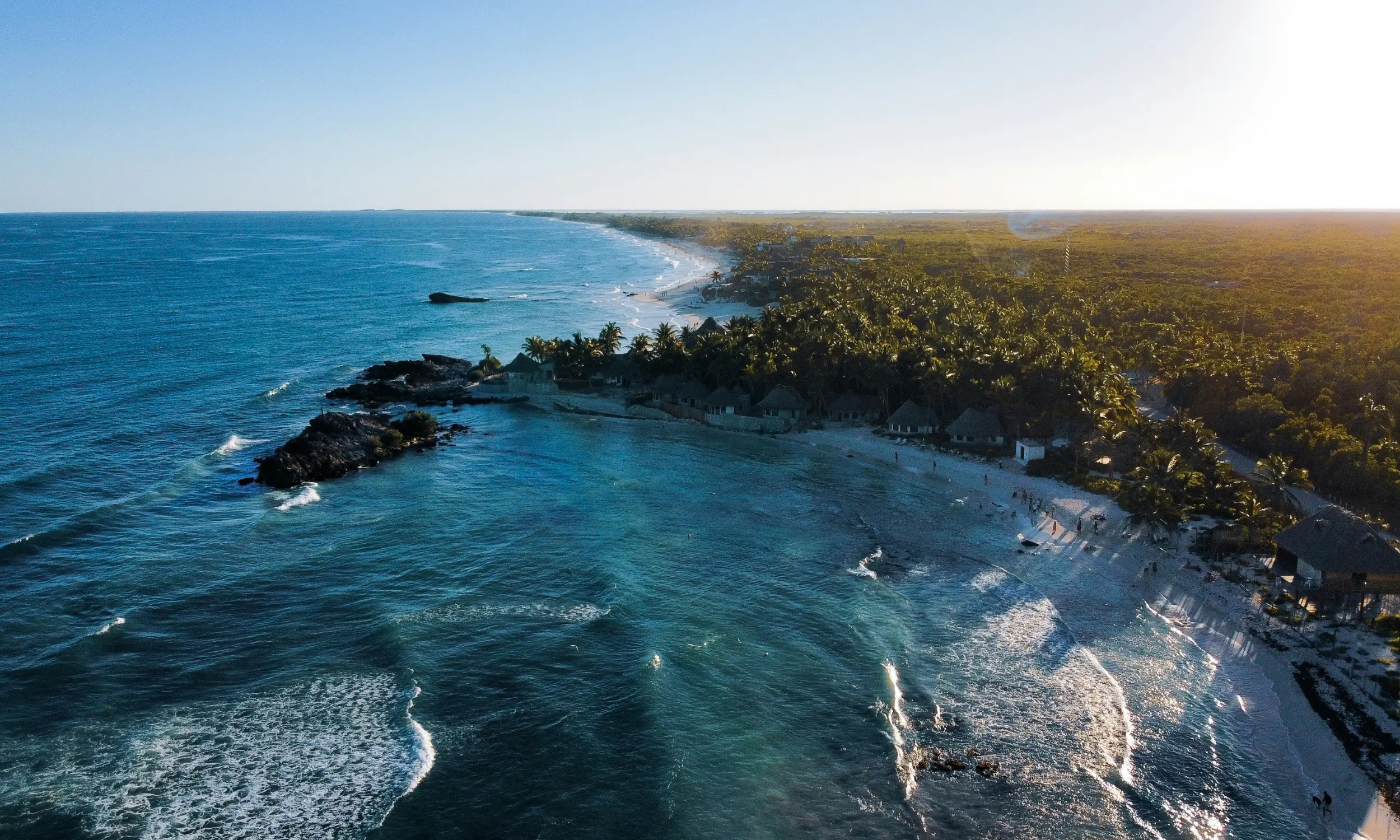
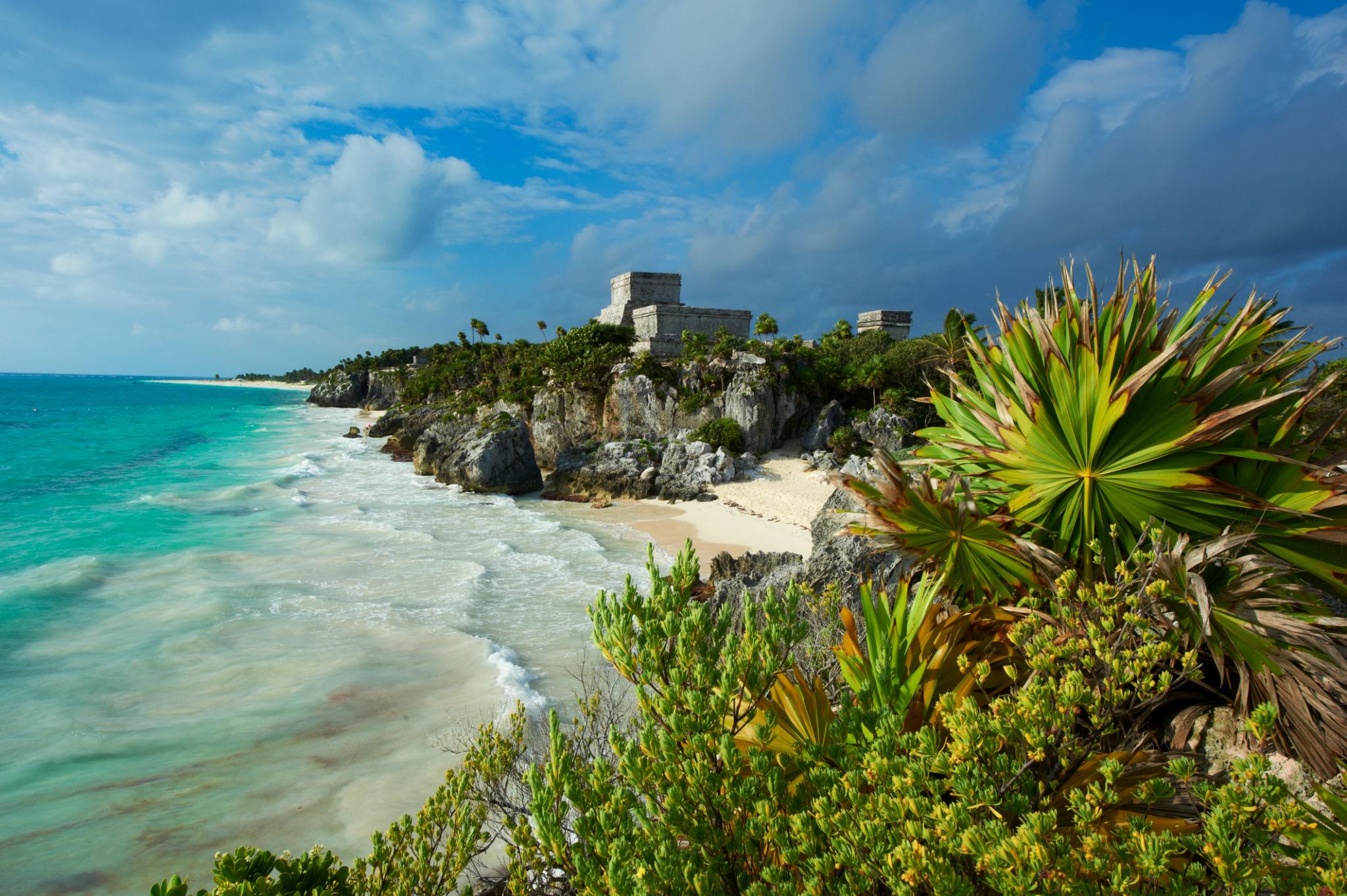
Move to the coast and the ambition scales up without losing thesame logic. Tulum is the only major Maya city built directly onthe sea, and one of the few enclosed by a defensive wall, alimestone barrier running roughly 784 meters around threesides, with the cliff guarding the fourth.
El Castillo, the structure that draws every camera, sits on atwelve-meter limestone cliff above the water. For a long time itwas assumed to be purely a temple. Then, in 1984, researchersrecognized something more practical. Its small windows alignprecisely with the single natural break in the offshore barrier reef. At night, a fire lit within the structure turned it into aworking lighthouse, and when two reference points lined up, atrading canoe loaded with jade, turquoise, and obsidian couldfind the one safe passage through the reef to the harbor below.A sacred building and a piece of maritime infrastructure, doingboth jobs at once.
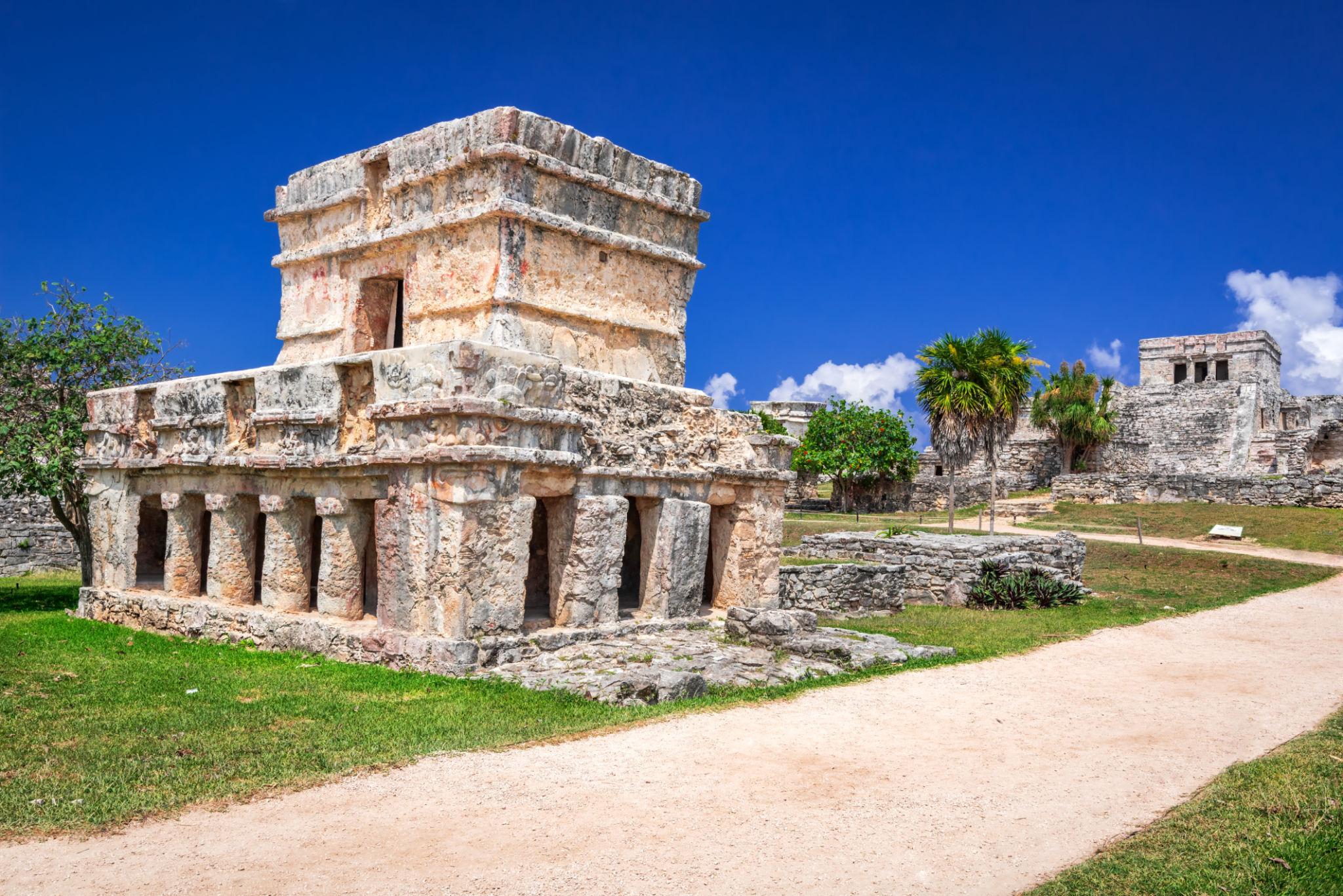
Nearby stands the Temple of the Frescoes, which functioned inpart as an observatory. Its interior murals are painted in threeregisters, the underworld, the world of the living, and the realmof the creator and the rain god Chaac, and its carved nichestrack a descending figure many scholars associate with Venusas the evening star. The buildings were not merely placed whereit was convenient. They were positioned according to rulesrefined over generations of astronomical observation, so thatthe architecture stayed in conversation with the sun, the sea,and the seasons.
MATERIALS THAT BELONGED TO THE PLACE.
The Maya built with what the ground gave them, which is alarge part of the reason so much of it survived. Each cityquarried its own limestone, the stone the entire peninsula ismade of, a shelf of compressed marine life lifted out of theseabed around ten million years ago. They cut it into blocks fortheir walls and their pyramids. They burned the same stone toproduce lime, and from that lime they made the mortar thatheld the blocks and the plaster render that sealed and protectedthe facades.
The proof of the method is still on the walls. The painted limerender on the Temple of the Frescoes and the Temple of theDescending God carries legible color today, after five centuriesexposed to the open Caribbean. That is the most demandingdurability test a coastal material can be set. Salt air is merciless. It pits stone, corrodes metal, and lifts most modernfinishes within a few seasons. Pigment applied by hand beforethe city was abandoned, still readable now, is not a romanticdetail. It is evidence that the material was correctly matched tothe place that would have to keep it.
There is a cautionary thread in that story too, and it belongshere because it keeps the lesson honest. Producing lime at thescale these cities used it meant burning limestone at high heat,which consumed enormous quantities of hardwood. A number ofarchaeologists count that sustained deforestation among theenvironmental pressures that strained the Classic Maya cities inthe period before their decline. Even the most place-awarebuilders this peninsula has ever known had to reckon with thereal cost of their materials. The lesson is not that the old waywas perfect. It is that building here has always demandedreading the land closely, using what it genuinely provides, andrespecting the point at which it pushes back.
WHAT MOST OF TULUM FORGOT.
Much of what gets built on this coast now does the opposite ofall this. It imports a silhouette from somewhere with a differentclimate, then spends enormous energy fighting the place itlanded in. Flat roofs bank heat that the air conditioning has tofight all night. Materials drawn from dry inland cities sweat,stain, and corrode in salt air they were never tested against. Thebuilding looks finished on opening day and begins arguing withits surroundings on the second.
The homes that last in Tulum do what the nah and the cliff citydid. They sit low and shade themselves. They use stone, lime,and timber that have already proven they can live in this air.They are oriented to the sun and the breeze rather than against them. They treat the climate as a collaborator that was herefirst.
This is what material intelligence actually means. It is thediscipline of building something that agrees with where itstands.
BUILDING WITH THE LAND, AGAIN.
Some of this knowledge never left. In Pino Suárez, theresidential corridor inland from the hotel zone, the land ismanaged according to principles drawn directly from Mayanconstruction and agricultural practice. The roads are laid inlayers of sediment that let rainwater permeate the groundrather than run off it, preserving the mangrove root systemsthat filter and sustain the surrounding ecosystem. Timber isworked in accordance with lunar cycles, practical knowledgeabout how wood behaves rather than folklore.
It is on that land that L'TOPIA's Genesis Collection sits. Sixvillas, each by a different architect, each arriving at its ownspatial logic, connected by a single insistence that everydecision about light, material, orientation, and proportion bemade in reference to how it will feel to live there over decades.Stone and lime and timber chosen because they can live in thisair. Roofs and rooms shaped to the sun and the breeze ratherthan against them. The climate treated as the collaborator it hasalways been.
The people who built here first understood something worthcarrying forward. The land was here long before anyarchitecture, and it will outlast all of it. The wise thing, then andnow, is to build in agreement with it. The homes that do are theones that will still be standing, and still be wanted, long afterthe rest have been replaced.
contact us